
Bird Control
Which Bird Control Solution Is Right for Your Commercial Property?
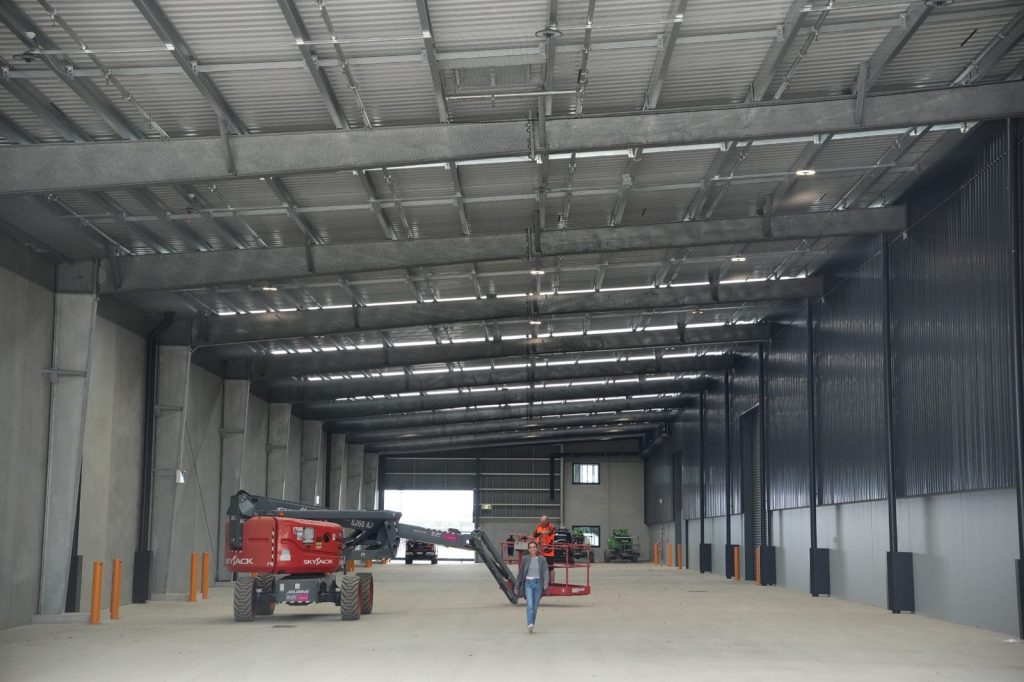
If you’re dealing with birds on your roof, birds entering your warehouse or ongoing fouling around your building, you may be wondering which bird control solution will actually solve the problem.
Bird netting, spikes, pulse-wire and other deterrents all have their place, but what works for one commercial property may be completely unsuitable for another.
The right approach depends on the bird species, the building’s design, where birds are gathering and how the property is used.
Here’s a practical guide to the main bird management solutions available and when each is most effective.
Bird Netting – Protecting Larger Areas and Preventing Access
Bird netting is one of the most versatile solutions for commercial and industrial properties. It creates a physical barrier that prevents birds from accessing protected areas.
It’s particularly useful for warehouses, loading canopies, roof structures and other locations where birds are roosting or nesting.
For example, a distribution centre experiencing bird activity above stored goods may benefit from internal netting that prevents birds from settling in overhead structures, helping reduce the risk of contamination.
Netting can also protect exposed building features and equipment where other deterrents may be impractical.
Best suited for: Large or complex areas requiring physical exclusion, including warehouses, canopies and roof structures.
What to consider: Netting must be correctly designed, installed and maintained. Poorly fitted or damaged netting can leave gaps that birds exploit, while access for building maintenance needs to be considered from the outset.
Bird Spikes – Preventing Birds From Perching
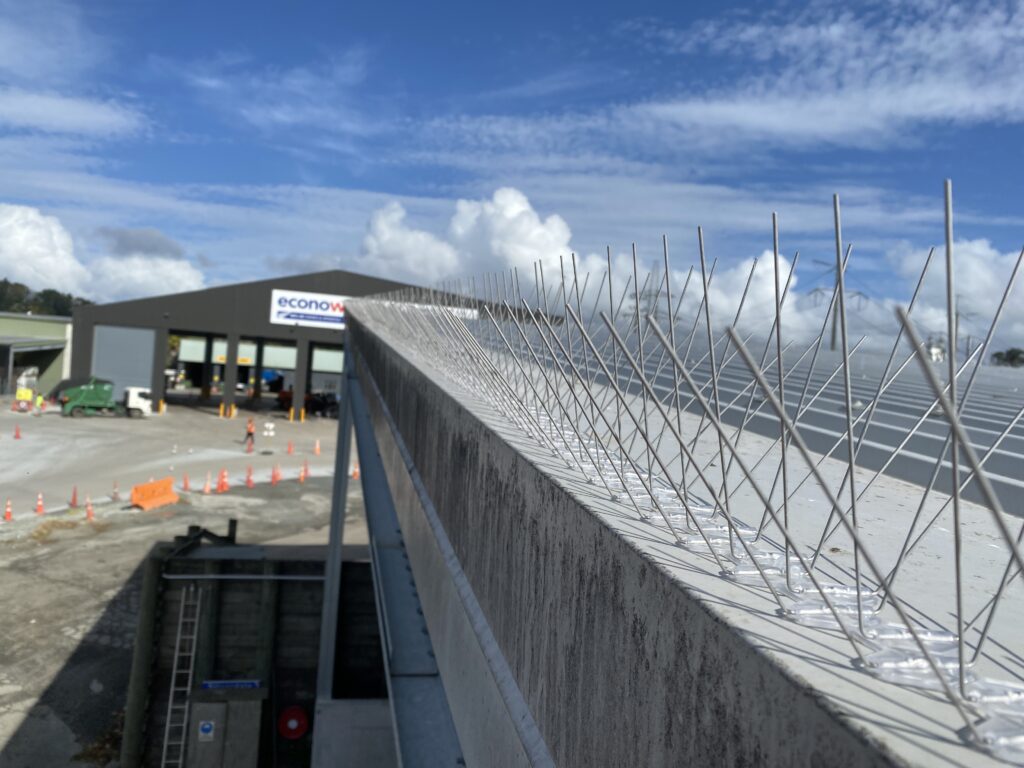
Bird spikes are a straightforward way to discourage birds from landing on suitable building features.
They are commonly installed along ledges, signage, parapets, beams and other narrow surfaces where birds regularly perch.
Bird spikes are available in narrow and wide configurations, with different options suited to different bird species and the areas they are trying to land or perch on.
For customer-facing properties, spikes can be particularly useful where birds gather above entrances or walkways, creating ongoing fouling problems below.
When properly selected and installed, they make the treated surface unsuitable for perching without needing to enclose the surrounding area.
Best suited for: Ledges, signage, parapets and other defined perching locations.
What to consider: Spikes aren’t a complete solution for every situation. They may be ineffective against birds occupying nearby untreated areas, and the correct spike configuration depends on the species and the surface being protected.
Pulse-Wire – An Effective Option for Metal Rooftops
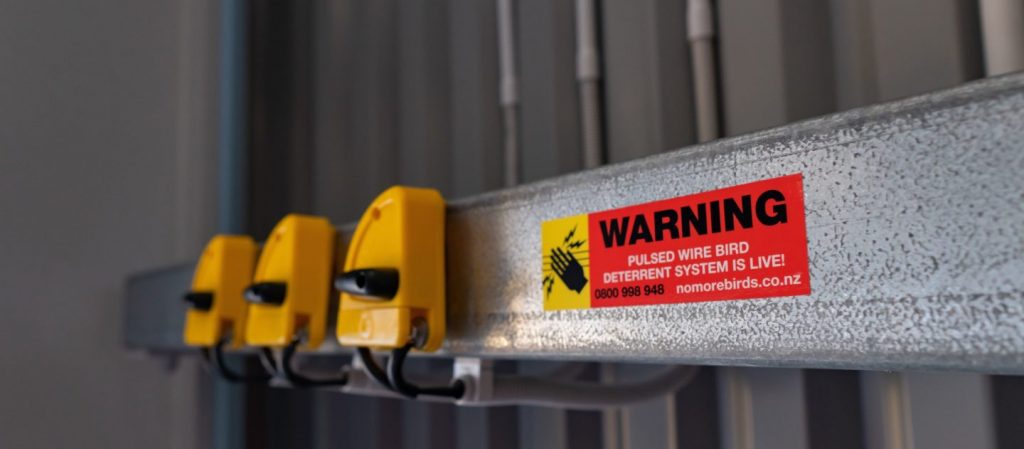
For commercial and industrial buildings with metal roofing, pulse-wire systems can be an effective way to discourage larger birds from settling on vulnerable areas.
These systems use strategically positioned wires that deliver a brief, low-energy electrical pulse when birds make contact, encouraging them to avoid the treated location.
Pulse-wire is particularly useful on metal rooftops and roof features where traditional spikes or netting may not be the most practical option.
It can help protect areas affected by repeated perching and fouling, reducing the accumulation of droppings that can contribute to deterioration of protective roof coatings.
Best suited for: Suitable metal rooftops, rooflines and other building features where targeted deterrence of larger bird species is required.
What to consider: Pulse-wire generally involves a higher initial investment than simpler deterrents and requires ongoing inspection and maintenance to remain effective. Suitability depends on the roof design, installation conditions and bird activity.
Bird Brush – Closing Gaps Around Commercial Roller Doors
For warehouses, factories and distribution centres, preventing birds from entering the building can be just as important as discouraging them from roosting inside.
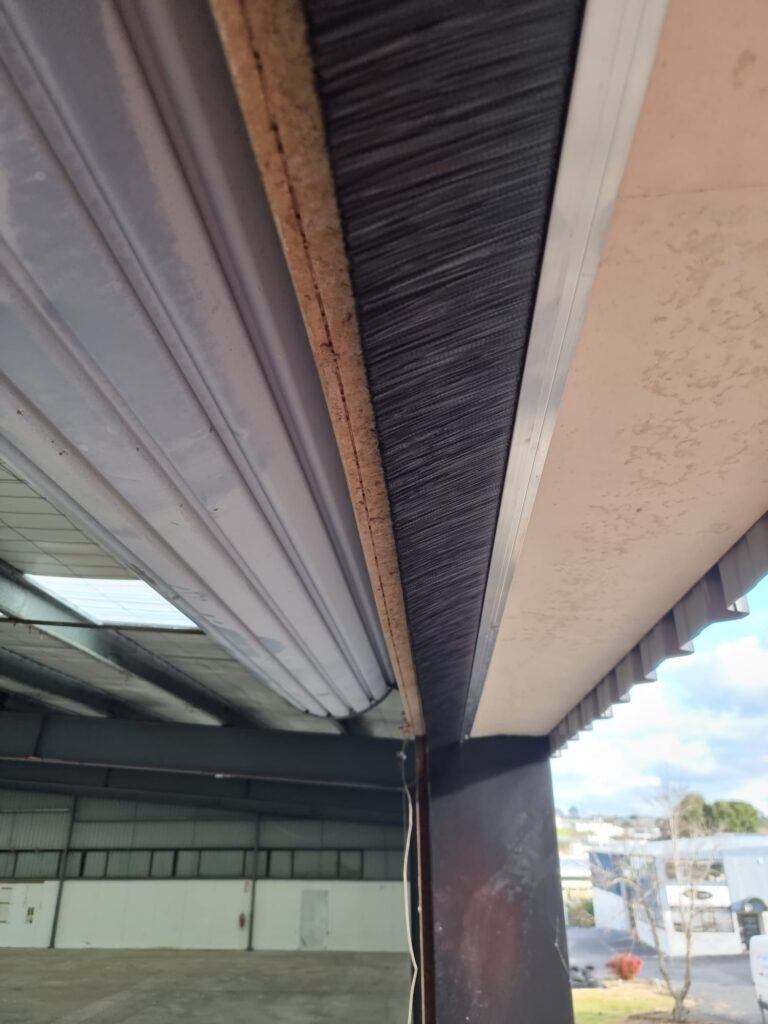
Commercial roller doors often have gaps around their edges when closed, providing opportunities for smaller birds to enter.
Bird brush is designed to help close these gaps while allowing the door to operate normally.
It’s a practical solution for buildings where birds are entering through gaps around closed roller doors, particularly in facilities storing food products, packaging or other goods vulnerable to contamination.
Best suited for: Gaps around commercial roller doors and other suitable access points.
What to consider: Bird brush addresses gaps when doors are shut. It won’t prevent birds from flying through an open doorway during normal operations, so additional measures may be required.
For more information, read our Knowledge Centre article How Do Birds Get Into Warehouses – and How Can You Keep Them Out?
Professional Marksman Services – Managing Established Bird Populations
Physical deterrents and exclusion systems are designed to protect specific areas, but some properties also have significant pest bird populations that require active management.
This is where professional Marksman services can play an important role.
No More Birds provides specialist Marksman services to manage pest bird populations where appropriate, particularly across large commercial and industrial sites experiencing persistent bird activity.
For example, a manufacturing facility may have pigeons regularly gathering across several buildings, creating ongoing fouling and maintenance problems.
In these circumstances, population management may be recommended alongside physical deterrents to help reduce bird pressure across the wider property.
Best suited for: Established pest bird populations, recurring activity and larger commercial or industrial properties requiring ongoing management.
What to consider: Population management needs to be appropriate for the species, location and relevant legal requirements. It may also need to be combined with exclusion measures to prevent suitable roosting and nesting locations from being reused.
Why the Best Solution Isn’t Always Just One Product
Commercial properties rarely have identical bird problems.
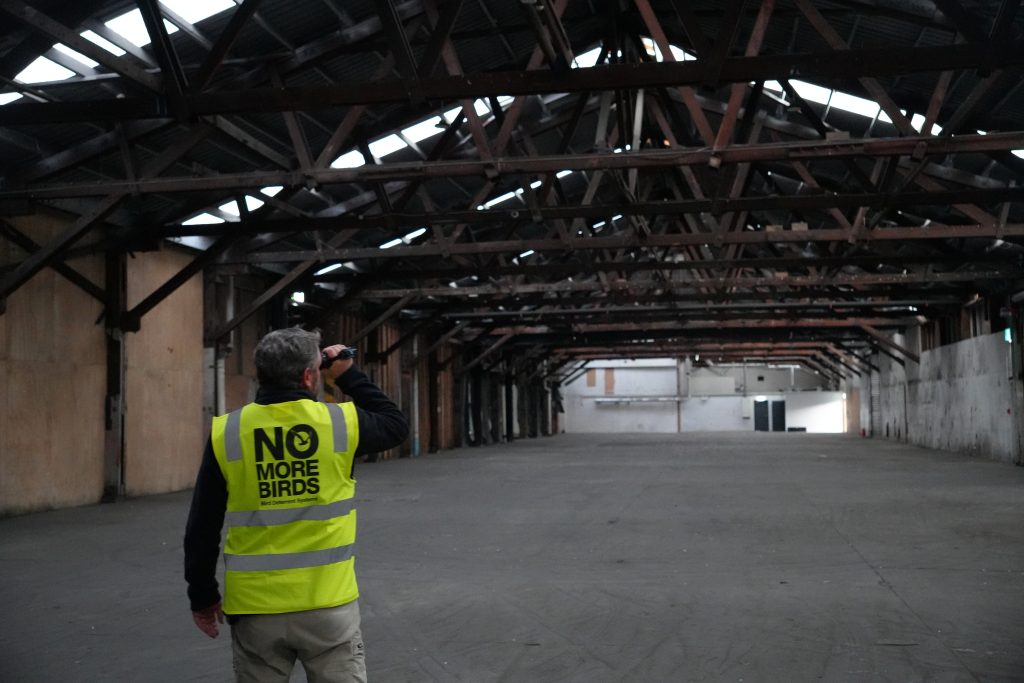
A warehouse might have birds entering through roller doors, pigeons roosting in overhead structures and an established population gathering on the roof.
Installing bird brush could help address gaps around closed doors, while internal netting protects stock below. Professional Marksman services may also be appropriate for managing the wider population.
The most effective approach is often a combination of solutions selected for the specific problems occurring on site.
That’s why understanding how birds are using a property is so important before recommending an installation or management programme.
Our article Why Birds Keep Returning to Commercial Properties explains some of the factors that make certain buildings particularly attractive to pest birds.
Not Sure Which Bird Control Solution You Need?
Choosing the wrong deterrent can mean spending money without resolving the underlying problem.
At No More Birds, we specialise in commercial bird management throughout New Zealand. Our team assesses the species involved, the building’s design and the areas affected before recommending a practical solution.
Whether you need bird netting, spikes, pulse-wire, bird brush, professional Marksman services or a combination of approaches, we can help identify the right option for your property.
Don’t waste time and money on a solution that doesn’t address the problem.
Contact No More Birds today for a FREE commercial site inspection and no-obligation quote.
Call us now: 0800 998 948